
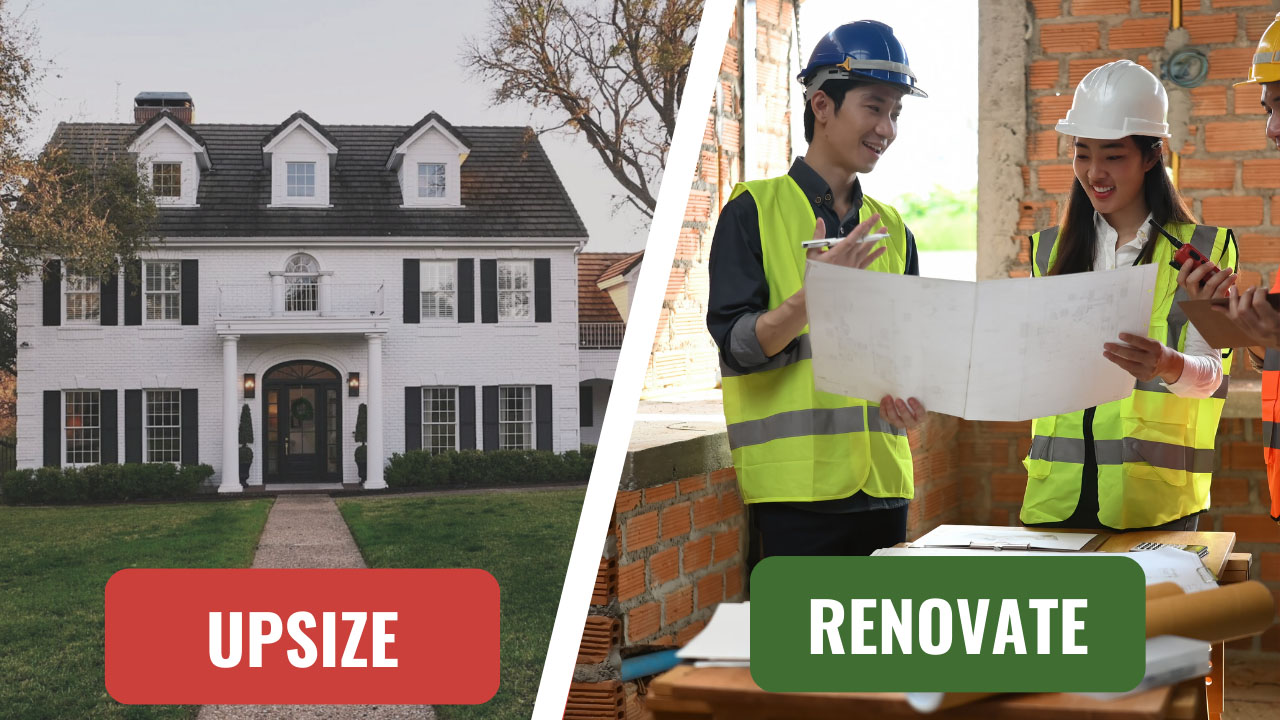
 As life changes, your home needs can change as well. Growing families, new hobbies, remote work, or lifestyle shifts often create the question many homeowners eventually face. Should you move into a larger home, or should you stay where you are and renovate? The answer is not always simple, and the right choice depends on your finances, your long-term goals, and how well your current home can adapt. As real estate professionals, we help homeowners evaluate these choices so they can move forward confidently.
Consider How Much Space You Truly Need
Before deciding to upsize, take a close look at what kind of space your lifestyle requires. Do you need an extra bedroom, a dedicated home office, or more storage Many homeowners discover that reconfiguring their current layout solves their space issues. Others realize that their needs exceed what their current home can reasonably provide. Listing out your must-have spaces helps clarify whether a renovation can meet your goals or if a new home makes more sense.
Compare the Cost of Renovating With the Cost of Moving
Renovations can be expensive, especially when structural changes, electrical upgrades, or plumbing work are involved. At the same time, moving comes with its own costs, including a down payment, closing costs, moving fees, and higher property taxes. A side-by-side comparison can help you see which option fits your budget best. If renovating gives you the features you want without stretching your finances, staying put may be the smarter choice. If renovation costs approach the price of a larger home, upsizing may offer more long-term value.
Evaluate How Your Current Neighborhood Supports Your Lifestyle
Neighborhood amenities can be just as important as the home itself. If you love your current school district, commute time, or local conveniences, renovating may allow you to stay in an area that already works for your family. On the other hand, if you want different amenities, a new neighborhood, or a shorter commute, upsizing may open the door to a lifestyle upgrade as well as a space upgrade. Your home should support both your daily comfort and your long-term plans.
Look at the Return on Investment for Renovations
Not all renovations offer equal value. Updating kitchens or bathrooms, adding usable square footage, or improving energy efficiency tends to increase home value. However, highly customized upgrades may not offer strong resale return. Before committing to renovation, consider how much value it will add and whether it aligns with your future plans. A real estate professional can help you estimate the potential return based on your neighborhood and local market trends.
Thinking About Your Long-Term Goals
Your home should fit your long-term vision. If you plan to raise your family, start a business from home, or host guests regularly, upsizing may provide the right long-term fit. If you love your home and see yourself staying for many years, renovating can personalize your space without the stress of moving. Long-term clarity helps you make a choice that feels good now and still feels right in the years ahead.
Choosing between upsizing and renovating is a major decision, but with the right information and a clear understanding of your goals, you can choose the path that offers the most comfort, value, and long-term satisfaction.
